
A Chief Minister’s Wedding and a Royal Alliance
Two Celebrations OF J& K Capture National Attention
From Omar Abdullah–Nidhi Razdan’s much-discussed marriage to the grand Dogra royal wedding of Martand Singh and Rhea Badal, two matrimonial alliances bring together politics, journalism, royal heritage and influential families.
Jammu and Kashmir has been in the spotlight for two high-profile marriages in October and November this year, attracting considerable attention in political, social and media circles across the country. While one brought together a serving Chief Minister and a prominent television journalist, the other witnessed a grand matrimonial alliance between the erstwhile Dogra royal family of Jammu and Kashmir and the politically influential Badal family of Punjab.
The marriages of Jammu and Kashmir Chief Minister Omar Abdullah with senior journalist Nidhi Razdan and Rajkumar Martand Singh with Rhea Badal have been among the most talked-about social developments of the season. Though different in character and scale, both occasions have brought together prominent personalities from politics, journalism and India’s erstwhile royal households.
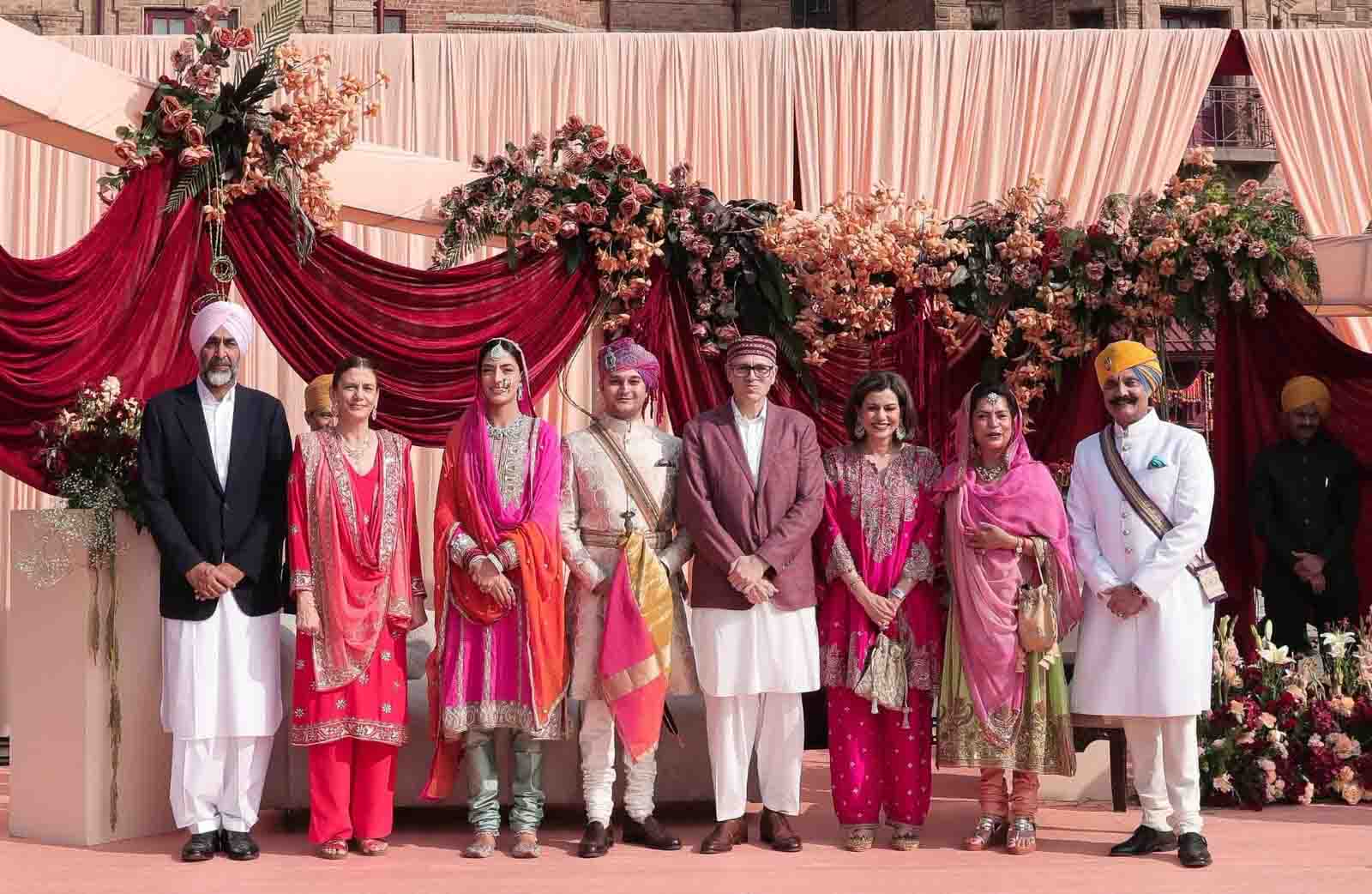
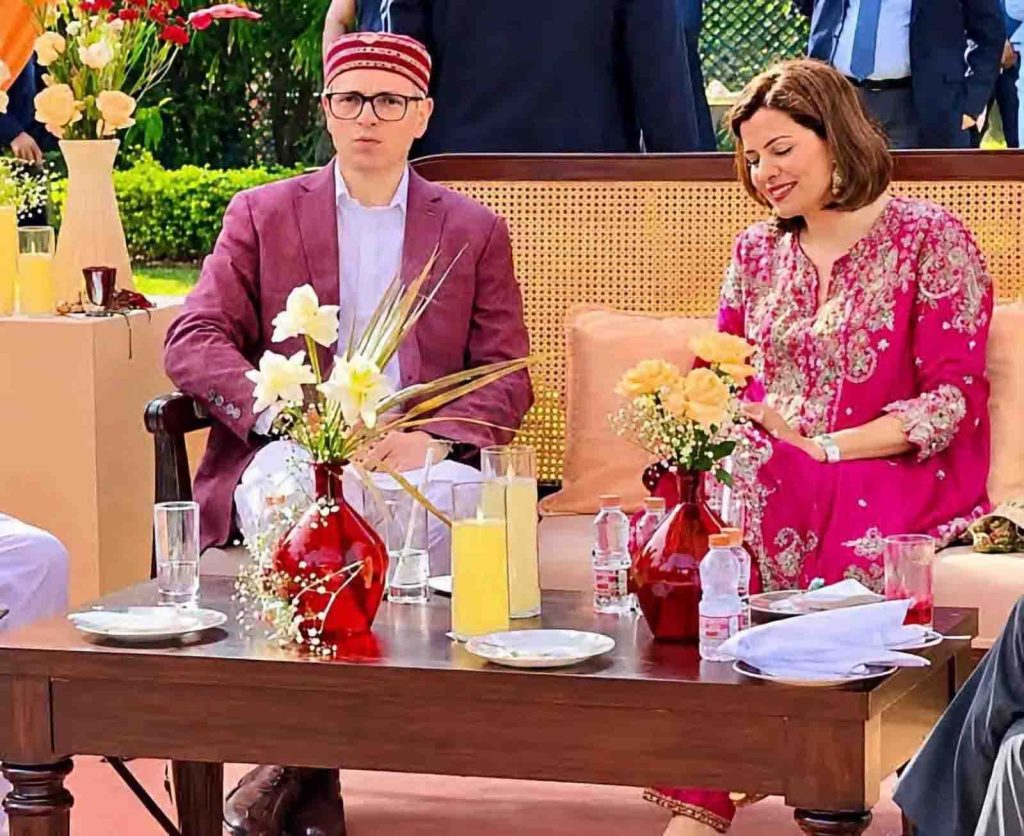
Interestingly, the two events also came together at the grand reception hosted at Jammu’s historic Amar Mahal Palace on November 15, where Omar Abdullah and Nidhi Razdan were among the distinguished guests attending the wedding celebrations of Martand Singh and Rhea Badal.
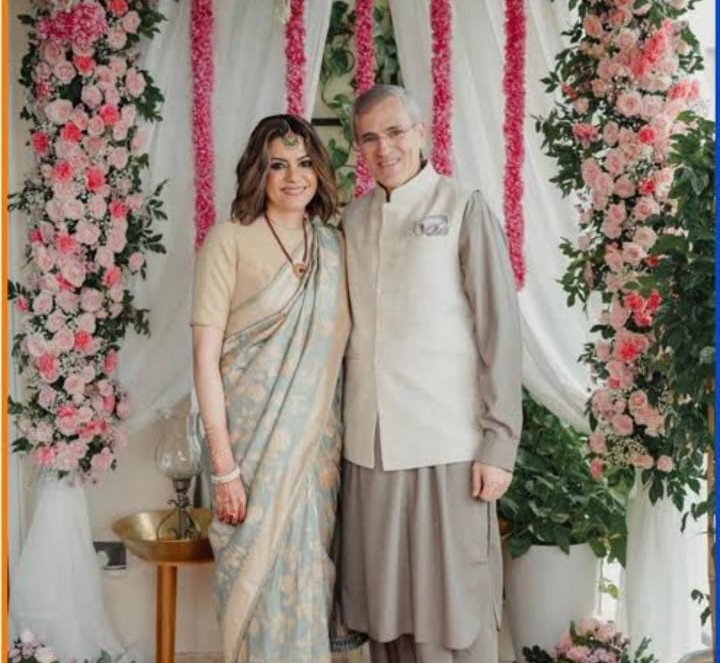
Omar Abdullah and Nidhi Razdan: A new chapter in the Chief Minister’s personal life.
The marriage of Jammu and Kashmir Chief Minister Omar Abdullah with well-known journalist Nidhi Razdan attracted widespread attention after the couple announced their wedding through social media on October 31, 2026.
The marriage ceremony took place on October 30 in New Delhi, according to media reports, while a private family gathering was also held in Srinagar.
Sharing photographs of the newly married couple on social media platform X, Omar Abdullah wrote, “A new journey began yesterday.” Nidhi Razdan responded with a light-hearted message, “It’s done bro.” Their candid posts quickly attracted attention and congratulatory messages from across the country.
According to reports, the marriage was solemnised under the Special Marriage Act in the presence of close family members from both sides.
The marriage marked a new beginning for both. Omar Abdullah’s previous marriage to Payal Abdullah, which had been a subject of prolonged legal proceedings, was dissolved by the Supreme Court in July 2026 following a settlement between the parties. Nidhi Razdan was also previously married to journalist Neelesh Misra.
Omar Abdullah, 56, is one of Jammu and Kashmir’s prominent political personalities and currently heads the Union Territory’s government. Nidhi Razdan, 49, is a familiar face in Indian television journalism, having spent several years reporting on national politics and current affairs.
Martand Singh and Rhea Badal: A grand royal alliance connecting influential families
If Omar Abdullah and Nidhi Razdan’s marriage attracted attention for its political and journalistic significance, the wedding of Rajkumar Martand Singh and Rhea Badal became a major social occasion for its royal heritage and family connections.
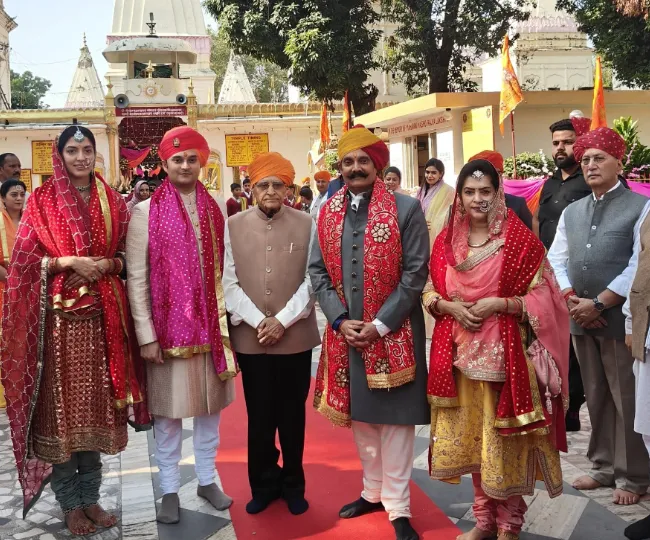
The marriage brought together two prominent family lineages — the erstwhile Dogra royal family of Jammu and Kashmir and the politically influential Badal family of Punjab. The groom, Rajkumar Martand Singh, is the son of Yuvraj Vikramaditya Singh and Yuvrani Chitrangada Raje and grandson of Dr. Karan Singh, former Union Minister and former Sadr-e-Riyasat of Jammu and Kashmir.
The bride, Rhea Badal, is the daughter of former Punjab Finance Minister Manpreet Singh Badal and Vinu Badal.
The marriage also connects the Scindia royal family of Gwalior, as Martand Singh’s mother, Chitrangada Raje, is the sister of Union Minister Jyotiraditya Scindia and daughter of the late Madhavrao Scindia.
Thus, the matrimonial alliance has brought together three prominent family networks associated with the historical and political landscape of Jammu and Kashmir, Punjab and Gwalior.
A series of celebrations across cities
The wedding festivities began in Chandigarh on October 28, 2026, with a dinner and reception attended by family members and invited guests.
The celebrations subsequently moved to New Delhi, where Martand Singh and Rhea Badal tied the knot in a traditional Sikh Anand Karaj ceremony on November 4.
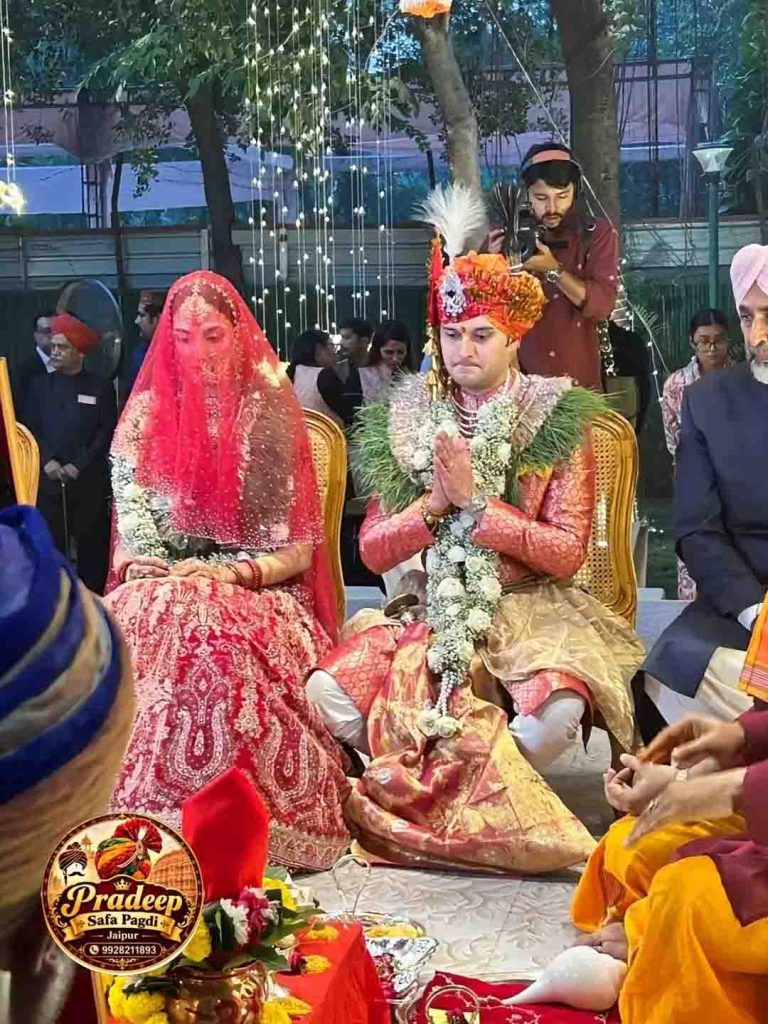
The wedding-related celebrations in the national capital attracted considerable attention, with Prime Minister Narendra Modi attending a grand reception on November 12. Defence Minister Rajnath Singh, Finance Minister Nirmala Sitharaman, Union Ministers Piyush Goyal and Jyotiraditya Scindia, besides several senior political leaders, diplomats, industrialists and members of erstwhile royal families, were among the distinguished guests reported to have attended.
The celebrations then moved to Jammu, where the historic Amar Mahal Palace became the venue for the traditional Vadhu Pravesh ceremony and grand wedding reception on November 15.
The Vadhu Pravesh ceremony marked the traditional welcoming of Rhea Badal into the Dogra household. The occasion reflected the family’s heritage, traditional customs and cultural practices.
Amar Mahal witnesses a distinguished gathering
The historic Amar Mahal Palace in Jammu witnessed a gathering of prominent political personalities, constitutional dignitaries and members of several erstwhile royal families for the November 15 celebrations.
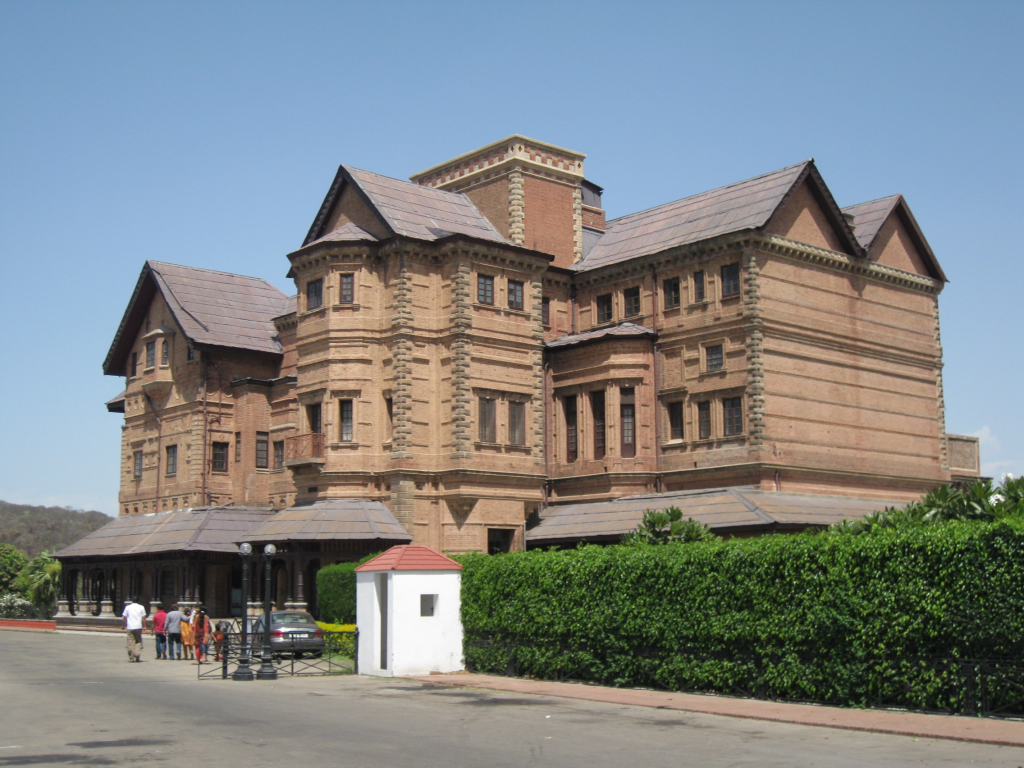
Jammu and Kashmir Chief Minister Omar Abdullah attended the reception with his wife Nidhi Razdan. Himachal Pradesh Governor Kavinder Gupta, Deputy Chief Minister Surinder Choudhary, Chief Justice of the High Court of Jammu and Kashmir and Ladakh, and several other political leaders and distinguished personalities also attended the occasion.
The presence of Omar Abdullah and Nidhi Razdan was particularly noteworthy, as the couple had themselves been in the national spotlight following their recent marriage.
The gathering brought together representatives of influential families from different parts of the country, adding to the social significance of the occasion.
The significance of the Martand Singh–Rhea Badal marriage goes beyond the wedding celebrations. It represents a coming together of family histories that have been closely associated with India’s political, social and cultural life.
The Dogra connection: The family of Dr. Karan Singh represents the historical Dogra royal lineage of Jammu and Kashmir. His grandson Martand Singh’s marriage has brought renewed attention to the family’s heritage and longstanding social connections.
The Badal connection: Rhea Badal belongs to the politically prominent Badal family of Punjab. Her father, Manpreet Singh Badal, has held important political and ministerial responsibilities in the state, while the wider family is associated with the political legacy of the late Parkash Singh Badal, former Chief Minister of Punjab.
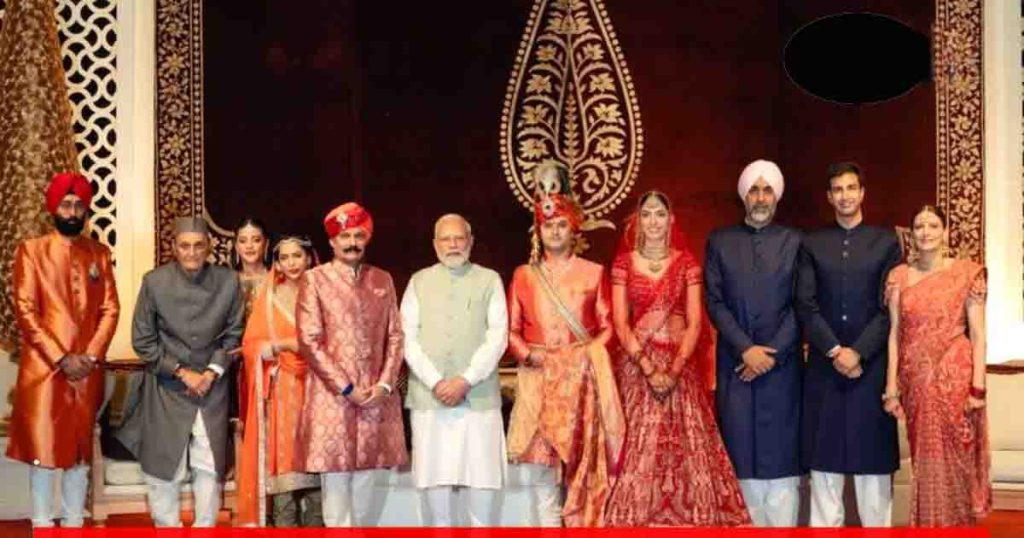
The Scindia connection: Through Chitrangada Raje, the groom’s mother and sister of Jyotiraditya Scindia, the marriage also connects the Dogra family with the erstwhile Scindia royal household of Gwalior.
The wedding celebrations also saw the participation of members of other erstwhile royal families, including those associated with Gwalior, Patiala, Jodhpur and other former princely states.
The gathering therefore represented not just a family celebration but also a reunion of several social and historical networks that continue to maintain close relationships.
Two weddings, two different stories, one national spotlight
The fact that Omar Abdullah and Nidhi Razdan attended the royal reception just days after their own marriage added another interesting dimension to the two much-discussed occasions.
Together, the weddings reflect two different aspects of India’s contemporary social landscape: the personal lives of prominent political personalities and the continuing social relevance of erstwhile royal families and their historical connections. For Jammu and Kashmir, these occasions have been more than celebrations of marriage. They have brought together politics, journalism, royal heritage, family traditions and influential personalities, placing the region firmly in the national social spotlight